How to protect your children's skin from the sun
Safeguarding skin isn’t just about sunscreen. All risks related to sun exposure can be drastically reduced from your children’s earliest days, even before they’re old enough for you to use sunscreen on them.
The best way to protect small babies from the sun? No sun
Babies under 6 months should avoid direct sunlight completely because their skin lacks sufficient melanin protection and is too delicate for sunscreen. When going outdoors, keep them in complete shade and use physical barriers: strollers with UV canopies, umbrellas, or covered outdoor areas. Dress them in protective clothing from head to toe: wide-brimmed hats covering neck and ears, long-sleeved shirts, long pants, and socks. Even brief sun exposure during car rides or walks can cause burns, so plan outings for early morning or late afternoon when UV rays are weaker.
When can you put sunscreen on a baby?
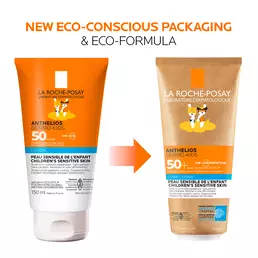
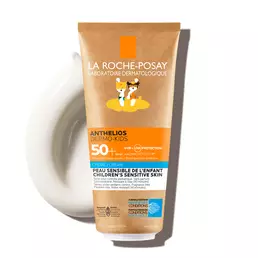
You can apply baby sunscreen from six months of age. Baby skin differs significantly from adult skin, which is why our Anthelios Kids Sunscreen SPF 50 is specifically formulated for babies' and toddlers' vulnerable skin. Tested under pediatric and dermatological control, it provides protection when combined with other sun-smart habits.
What is the difference between adult, baby and kids’ sunscreen?
Children’s skin is not the same as ours
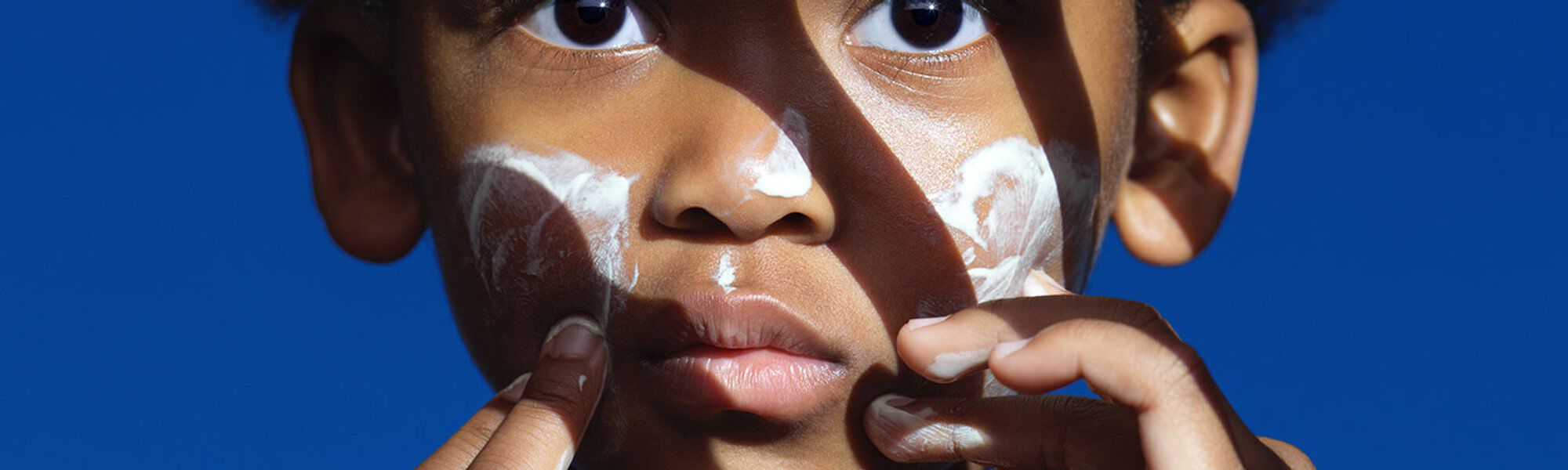
Children's skin differs significantly from adult skin, requiring different sun protection approaches. Children's skin is thinner and more fragile than adult skin. With their still-developing pigmentation system, they're especially vulnerable to harmful UVA and UVB rays (present even on overcast days). 50 to 80% of harmful effects of sun occur during childhood and adolescence*, which is why sun safety is crucial for kids.
What’s the best sunscreen for kids?
Most dermatologists recommend mineral sunscreen for kids over chemical formulas because they're gentler on delicate skin, including children with eczema**. La Roche-Posay's range of skincare for kids provides safe sunscreen for kids with minimal ingredients while offering broad-spectrum UVB and UVA protection. These fragrance-free formulas are ideal sunscreen for sensitive skin kids.
Sun protection for kids: It’s a year-round thing
UVA rays are present year-round, even during winter, and can penetrate clouds and windows. That's why kid friendly skin care extends beyond summer holidays. Children face UV exposure during outdoor activities throughout the year: park visits, playground time, school outings, and sports.
Other ways to protect your children's skin from the sun
Sun safety for kids: 5 easy things to keep in mind
Even high SPF sunscreens prevent only 97% of UV rays, not 100%. These simple sun safety tips can drastically reduce sun exposure risks:
- Seek shade between 11 a.m. and 4 p.m. when UV rays are strongest, and encourage children to play in shaded areas.
- Teach children to stay in shade if their shadow is smaller than they are.
- Use protective clothing: wide-brimmed hats, anti-UV sunglasses, dark clothing, and high-UPF swimwear for water activities.
- Remember that UVA rays pass through clouds and glass, creating sun exposure risk on overcast days and during car or plane travel.
- Choose the right format for your child’s age: cream textures work best for babies as they are easier to control during application, fluid formulas offer a lightweight alternative for delicate skin, while spray sunscreens are ideal for older children who are always on the move.
Understanding the dangers of sun exposure
What are the short-term risks?
Harmful effects of sun accumulate over time, with as few as 5 blistering sunburns before age 20 increasing melanoma risk by 80%***. Excessive sun exposure causes immediate risks: dehydration, heatstroke, and painful sunburn. Children often don't express discomfort until skin sensitization has already occurred.
What are the long-term risks?
Long-term effects include accelerated skin aging and skin cancers such as melanoma. Dermatologists identify the critical prevention window as birth to 20 years old.
Sunscreen for kids? Here are our top tips
If you want to know how to apply sunscreen effectively, consider these skin tips:
- Use broad-spectrum UVA-UVB SPF 50+ sunscreen on all exposed skin. What SPF is best for kids? SPF 50+ provides optimal protection.
- Apply generously every two hours. Use a golf ball-sized amount for full body coverage.
- Focus on frequently forgotten areas: ears, nose, lips, neck, hands, and feet.
- Reapply immediately after swimming or sweating or choose water resistant formulas.
- Teach children to apply their own sun protection from an early age to encourage healthy skin habits, keeping in mind that sunscreen is only suitable for babies older than 6 months.
Protecting children from harmful sun effects requires consistent habits for proper skin care for kids. By teaching sun-safe behaviors today, you help them take charge of their skin's health for life.
*Source: National Library of Medicine, abstract, Sun Exposure in Pediatric Age, 2021
**Source: National Eczema Society, UK, 2019
***Source: Wu S, Han J, Laden F, Qureshi AA. Long-term ultraviolet flux, other potential risk factors, and skin cancer risk: a cohort study. Cancer Epidemiol Biomar Prev; 2014. 23(6); 1080-1089.
Related Products